

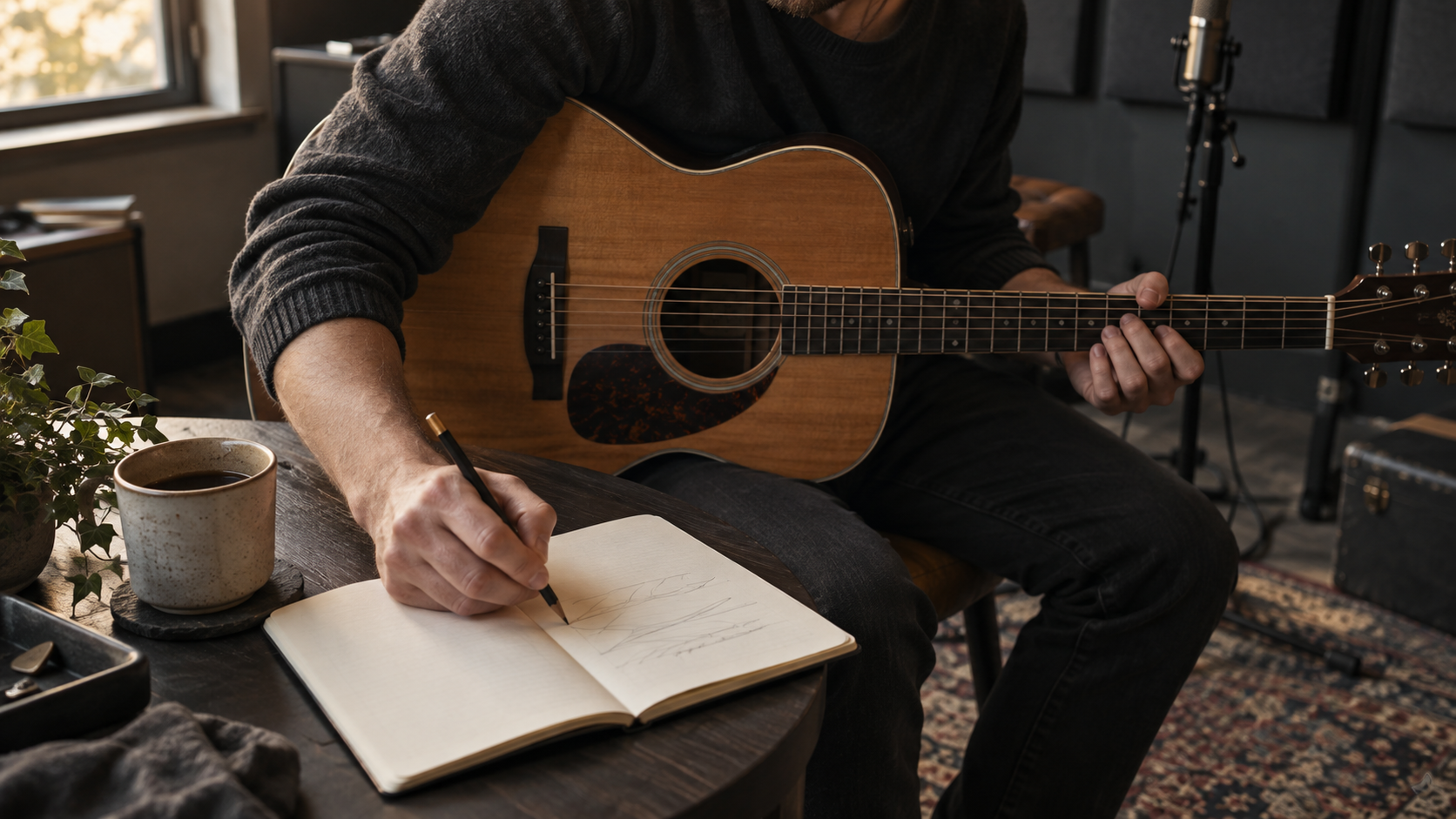
Start with five audible decisions
Turn “make something beautiful” into a musical brief you can hear and evaluate. Start with a musical family, tempo or rhythmic feel, leading instruments, vocal delivery, and a simple arrangement arc. Add the intended use when it changes the music: a spoken tutorial benefits from space around the narration, while an instrumental showcase can put the melody in the foreground.
Descriptive language works best as a set of musical priorities. “Warm electric piano, light brushed rhythm, intimate feel” gives you a sound to audition; “start sparsely, build at the chorus, end gently” gives it a direction. Listen for those choices in the generated take, then carry the strongest ideas into your next version. A useful prompt becomes a repeatable brief you can refine as you discover what suits the song.
Put each instruction in the right field
In Simple mode, write one compact description. In Custom, put genre, groove, instruments and production in Style; put words to be sung in Lyrics. Turn on Instrumental for music without vocals. Use Exclude styles for a short list of unwanted sounds, instead of repeatedly inserting “no” into the positive description.
Prioritize three indispensable choices. “Intimate solo piano, close dry sound, no vocals” is coherent. “Minimal solo piano, huge orchestral drop, dense guitars throughout” asks for competing arrangements. Use requested BPM, section lengths and instruments as audition criteria. Measure the generated tempo and choose the phrases that best support your arrangement.
| Vague brief | More useful direction | What to listen for |
|---|---|---|
| Beautiful music | Soft piano, sparse notes, long natural decay | Does the piano have room between phrases? |
| A powerful chorus | Add drums and wider backing vocals at the chorus | Does energy increase without hiding the lead? |
| Background music | Restrained midrange, stable groove, gentle transitions | Can the narration remain intelligible? |
| More professional | Dry lead, controlled bass, fewer competing layers | Is the arrangement clearer at low volume? |
Three prompts to adapt
Background for a spoken tutorial: “Warm instrumental downtempo, around 86 BPM, soft electric piano leads, restrained bass and a light brushed beat. Keep the midrange uncluttered for narration. Begin sparsely, add a subtle rhythmic layer halfway through, then end gently.” Enable Instrumental.
A vocal song: “Acoustic indie pop, around 104 BPM, fingerpicked guitar and rounded bass, intimate lead vocal, conversational verses and a more open chorus. Begin with guitar, add light drums at the chorus, return to a small ending.” Put your lyric in Lyrics, with [Verse] and [Chorus] labels. These labels describe the intended sections; check the generated phrasing to decide how the song develops.
An energetic instrumental: “Electronic funk, around 116 BPM, syncopated bass, short synth chords and crisp restrained drums. A short opening leads into a clear main groove; a quieter middle section returns to the groove. Clean, compact production.” Enable Instrumental. Adapt these starting briefs to your own melody, lyrics and intended use, then save each prompt with its resulting take.
Compare versions without losing the lesson
- Save your initial description and write down three pass criteria: audible electric piano, enough space for speech, no distracting climax.
2. Generate a baseline. Listen to the opening, a busy passage and the ending; record what actually happened.
3. Change one variable: replace “brushed beat” with “no percussion,” while keeping the rest fixed. Save both descriptions alongside their versions.
4. Compare at a similar listening level. Generation gives you variation even with the same prompt. Note the recurring improvements across takes, keep the useful direction and revisit the detail that still needs work.
5. Once the arrangement works, revise lyric phrasing or production detail separately. Keeping the strongest parts of the brief makes each comparison easier to learn from.
When the result misses the brief
Too crowded: reduce the instrument list and state which instrument leads. A list of eight instruments can encourage a dense arrangement. Wrong emotional feel: replace “emotional” with an audible choice such as a soft vocal, sparse rhythm or sustained piano. Unclear words: shorten crowded lyric lines and keep production instructions out of the sung text.
The chorus arrives later than you want: request a shorter opening and a simpler form, then audition where the energy changes. For a fixed picture timeline, select and trim a suitable phrase in your editor. The groove feels too slow or fast: tap or measure the result, then refine the tempo direction or use the speed tool for a practice or editing version.
Questions worth answering before another generation
What language should I write in? Use clear musical terms you understand. Keep the initial brief compact so it is easy to compare, and try a translated version when you want to explore another wording for a specific instruction.
Where should I start with advanced controls? Use the defaults for your first take, then adjust one control to answer a particular listening goal. Save the setting with the prompt so a successful direction is easy to revisit.
How can I work with a chord progression? Include the progression in the brief and listen for the resulting harmony. For precise note and timing decisions, sketch the chords in the chord generator, export MIDI and develop that explicit musical reference in your DAW alongside the generated material.
MAKE IT YOURS
Turn your next idea into music.
Bring a scene, a story or a few words. Find your sound with Tunenoodle.