

TUNENOODLE / Stem splitter / Brass & Woodwind
Woodwind separator
Bring flute, reed and other woodwind lines into a shared stem to study orchestral color, breathing and melodic handovers.
Woodwind separator
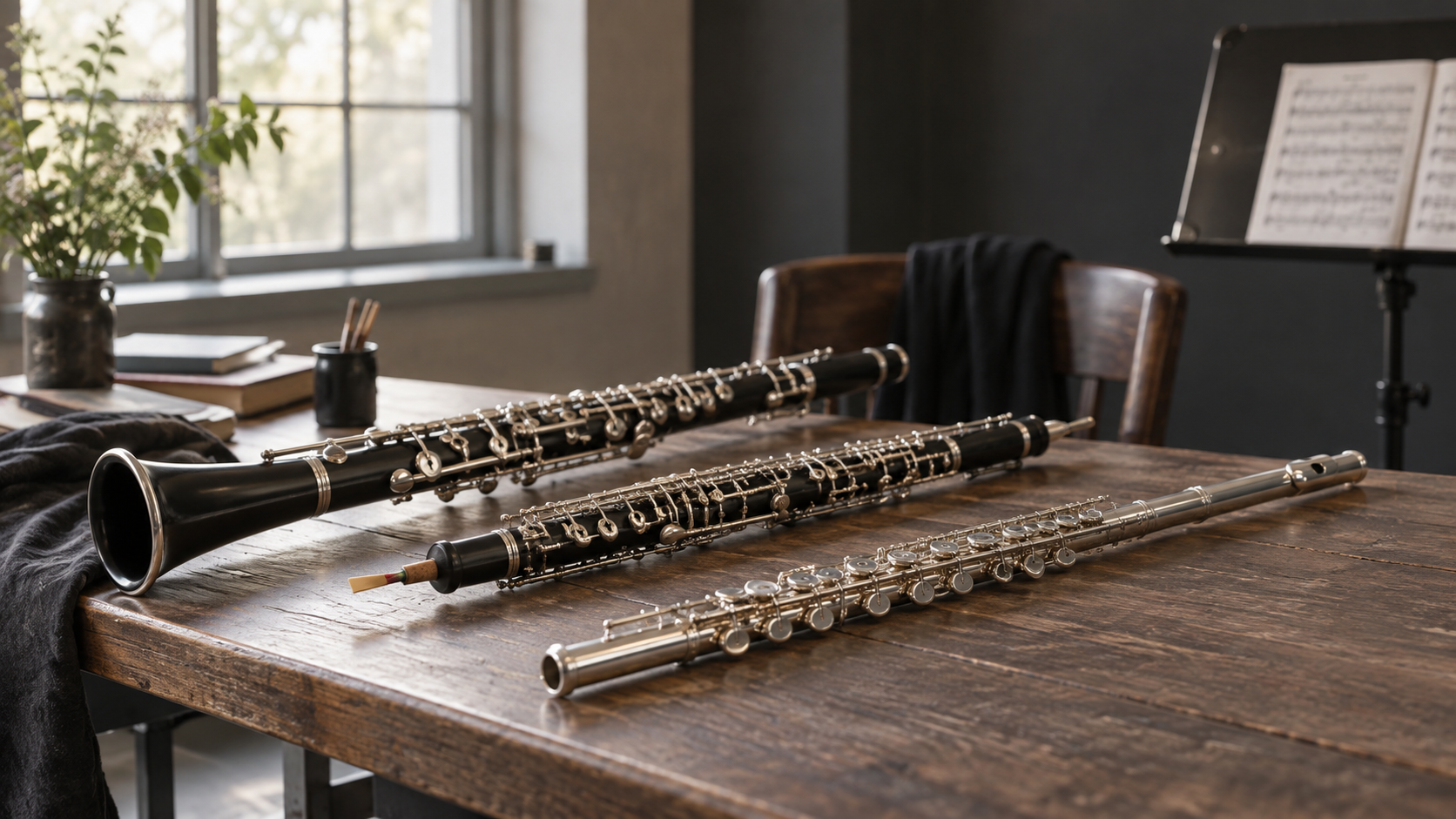
Woodwind writing often changes color by passing a melody between flute, oboe, clarinet and bassoon, or by combining them in a quiet chord. Woodwind mode collects that family into one stem with Other as the remaining mix. MVSEP’s woodwind category also includes saxophone; it is distinct from Brass and from the broader Wind target that combines both families. Use this mode to follow a changing orchestral color without first identifying every instrument. A composer can study how a line enters through a breath, a student can compare a solo with its surrounding harmony, and an arranger can hear the woodwind layer beneath strings. The output does not identify which player performed each note or create separate flute, oboe and clarinet files. A good check includes a delicate entrance, a sustained line and a moment of ensemble doubling. Breath noise can be part of the performance, while a thin or interrupted note can be a separation artifact. Similar vocal, string or synthesizer tones may spill into the stem. Compare passages where the woodwinds rest as well as where they play: those gaps help reveal whether the target is following the intended family or another sustained sound in the mix.
How to separate your track
- 01
Choose Woodwind for the family layer and separate the recording.
- 02
Compare a solo entrance, a family handover and a rest in both outputs.
- 03
Keep a complete phrase for study or compare Saxophone when that is your specific target.
What this mode gives you
| Parameter / option | What it changes |
|---|---|
| Start with the right source | Keep a quiet entry and its surrounding silence in the source. Include a passage with strings or voices so you can hear how the woodwind target behaves when timbres overlap. |
| Good for | Follow a melody passed between flute and reed instruments. Study a quiet woodwind chord without the full string layer. Prepare an ensemble excerpt that makes breathing and entrances easier to hear. |
| Listen for | Are quiet air-led entrances and note endings still audible? Does the melodic handover remain continuous across instruments? In woodwind rests, does another sustained source fill the target? |
A few useful answers
Woodwind is the narrower family. Wind also includes brass, making it a better match for a combined wind section.
Your next step
All modesWind instrument separator
Separate the combined wind family from a mix, including brass and woodwind, for arrangement study and section balance.
Brass separator
Extract the brass family to study chord voicings, section attacks and sustained swells apart from the rest of a mix.
Saxophone separator
Extract a saxophone-focused stem to learn solos, hear articulation and compare a sax line with the surrounding rhythm section.
Uses credits